
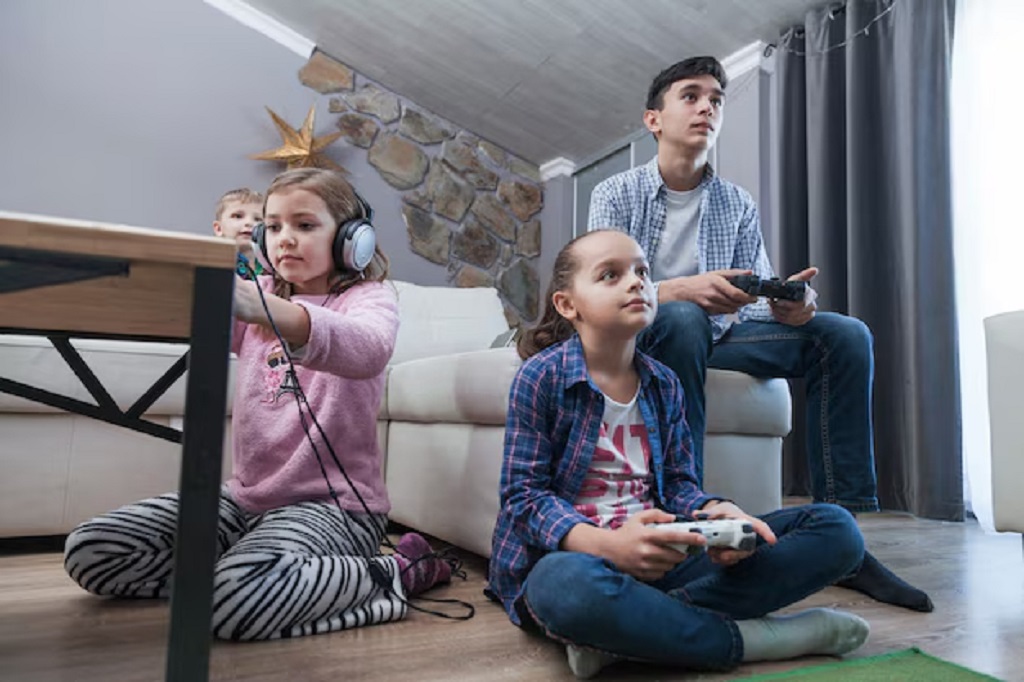
Choosing games for kids in 2026 is honestly more complicated than it looks. Between tablets, consoles, phones, and that constant little voice saying “just five more minutes”, yeah… I’ve been there. The real question isn’t “what’s popular right now ?”, it’s what actually fits your child’s age and how much screen time you’re okay with. Because let’s be real : not all games are equal, and some are way better than others for young brains.
Before diving into lists and ages, one thing helped me put things in perspective : stories and play don’t have to live only on screens. I stumbled across https://histoiredenfant.fr while looking for calmer alternatives, and it reminded me that games are just one piece of the puzzle. A useful one, sure, but not the whole picture.
Games for ages 3–5: short sessions, zero pressure
At this age, attention spans are tiny. Like, really tiny. Five to ten minutes can already feel long. So the best games here are simple, colorful, and forgiving.
Endless runner-style games with no timers, no “game over” stress, work surprisingly well. Think basic matching games, puzzle apps with big shapes, or interactive storybooks where tapping makes things move. I’ve noticed kids this age don’t care about winning. They care about sounds, movement, and “wow, it jumped !”.
Honestly, if a game makes them laugh out loud or point at the screen excitedly, that’s already a win. Keep sessions short. When they lose interest, stop. Don’t push it.
Games for ages 6–8: learning without feeling like homework
This is where things get interesting. Kids start understanding rules, goals, and progress bars. They like feeling smart. And yeah, they love unlocking stuff.
Creative sandbox games are gold here. Building, drawing, designing characters… it’s calm, but mentally active. Puzzle games with gentle difficulty curves also shine. If a level takes more than a few minutes, that’s fine. Struggling a bit is part of the fun now.
Screen time ? I’d say 20–30 minutes feels right. Long enough to get immersed, short enough to avoid the zombie stare. You know the one.
Games for ages 9–11: strategy, cooperation, a bit of challenge
Here’s where kids start asking why. Why did I lose ? Why did that work ? And honestly, that’s great.
Turn-based strategy games, cooperative adventures, and problem-solving games really click at this stage. I’ve seen kids spend ten minutes just planning their next move, whispering to themselves. It’s kind of impressive.
Multiplayer can be okay, but I’d stick to games that encourage teamwork rather than pure competition. Screen time can stretch to 30–45 minutes, especially on weekends. Still, breaks matter. A lot.
Games for ages 12+: independence, but still guidance
Teenagers don’t want “kids games”. They want autonomy. And yeah, sometimes that means pushing limits.
This is where you can introduce more complex genres : adventure games, simulations, even light competitive games. What matters most now isn’t the game itself, but how it fits into daily life. Is homework done ? Are they sleeping enough ? If yes, gaming can actually be a healthy outlet.
One thing that surprised me : teens often self-regulate better when they feel trusted. Set boundaries, explain them, and don’t hover every second.
How much screen time is “too much” in 2026?
Frankly ? It depends. On the kid, the day, the game. A fast, noisy game for an hour feels worse than a calm, thoughtful one for the same time.
My personal rule : watch behavior, not the clock. If a child is irritated, exhausted, or disconnected afterward, it’s probably too much. If they’re calm, talkative, and still curious about the world around them, you’re likely fine.
So, which games should you actually choose ?
Choose games that respect your child’s pace. That don’t scream every second. That leave room for imagination. And most importantly, games you’re not afraid to watch over their shoulder.
And you, what kind of games do your kids naturally gravitate toward ? The loud ones ? The thoughtful ones ? Sometimes, just observing that tells you more than any top list ever could.